
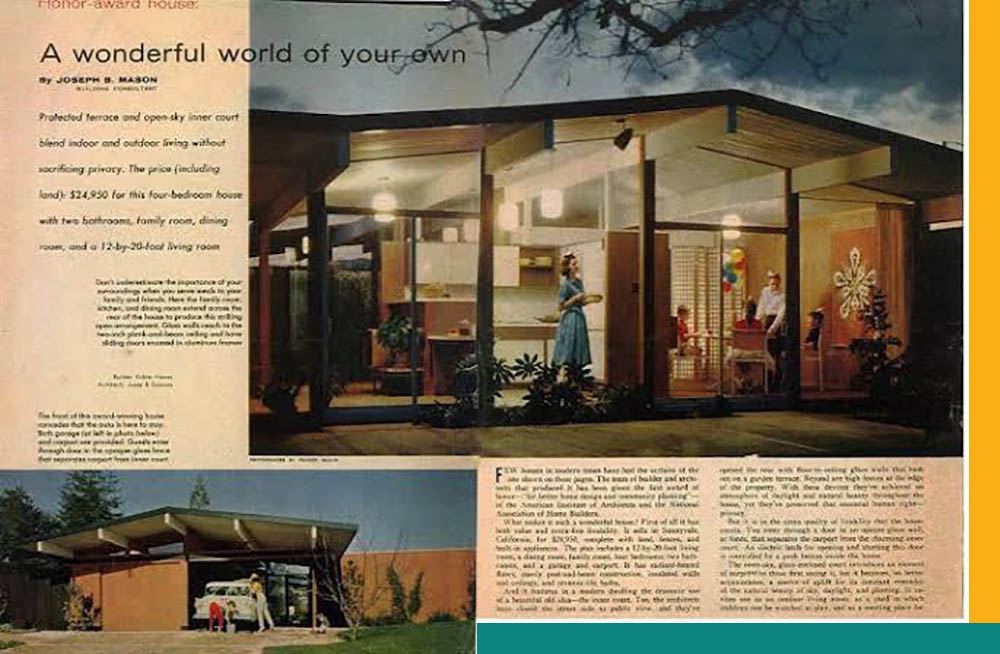
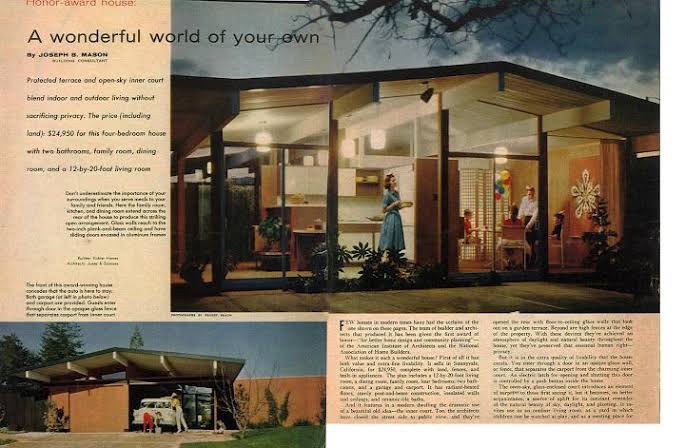
In the early chapters of Steve Jobs’ autobiography, writer Walter Isaacson details how the Apple cofounder’s upbringing and sense of aesthetic style was profoundly influenced by growing up in an architecturally designed home. Cofounder Steve Wozniak grew up in an Eichler home in California – a style now often sought after and known for being an architect-designed ‘tract’ home.
Eichler homes were a significant part of Californian project housing developments in new subdivisions from 1958. Around 11,000 of these homes were built, around greater Los Angeles and San Francisco Bay Area by real estate developer Joseph Eichler, in the modernist style.
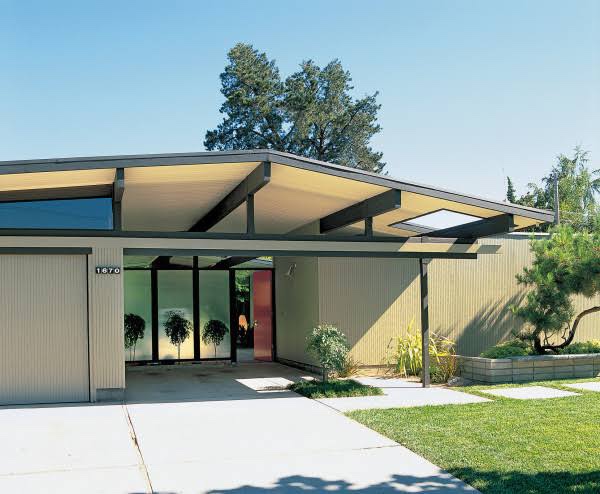
However it’s important to note that Eichler homes were very different in structure and materials compared to Pettit + Sevitt homes or similar styles built a little later in Australia.
Early Eichler Homes featured more Miesian Bauhaus influences and were aimed squarely at the middle class. They were a post and beam construction but with steel, including in some cases, metal ceilings and soffits. They were dominated by glass, and had concrete slabs… the latter of which was less common in Australia until the 80s. They also featured hallmarks of the aspirational leisure class: swimming pools, tongue and groove decking and unique timbers such as Philippine Mahogany.
Some even had atriums and few had front facing windows— instead, life was reoriented to the rear yard and pool, much the way many homes are designed today.

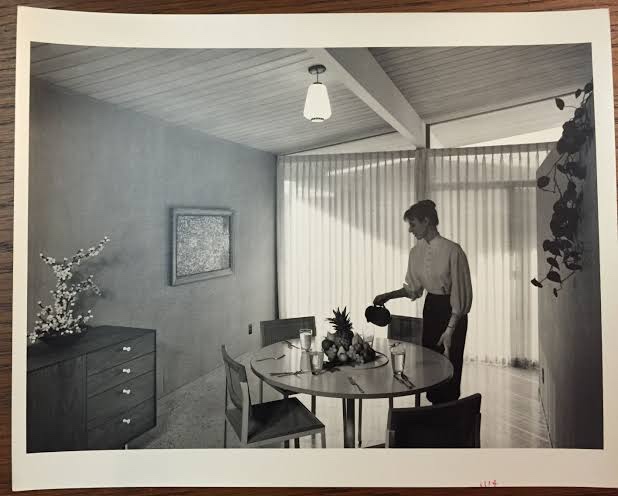
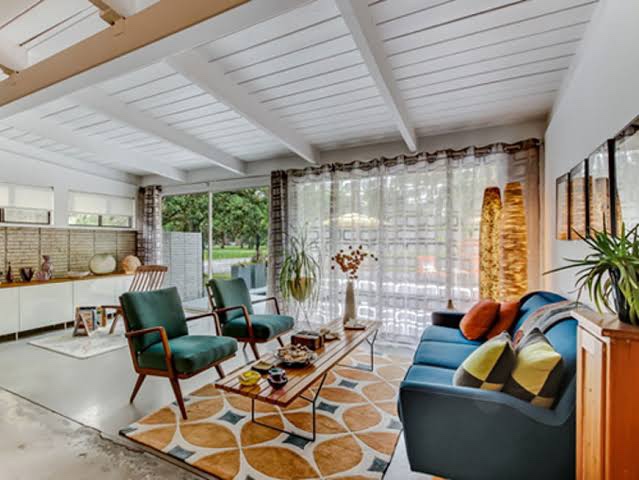
Interiors were optimistic, bright colours and lashings of white – like the quintessentially mid century homes of sunny Palm Springs.
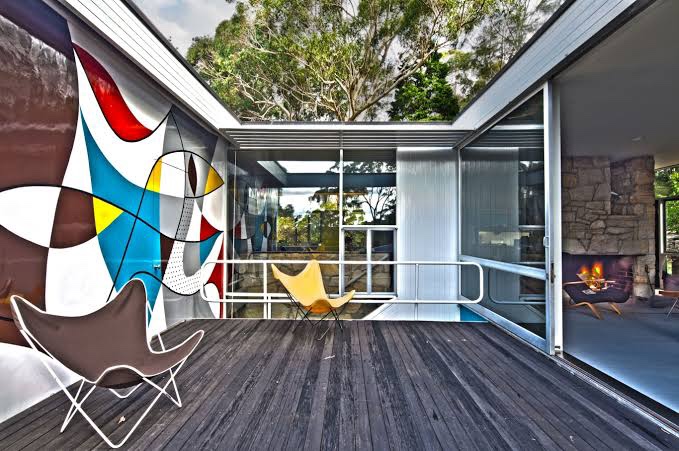
When I visit Harry Seidler’s Rose Seidler House, build around 1950, I often think its materials and interiors had more in common with simplicity of American modernist homes, including Eichler homes, than any form of Sydney vernacular that came after. This is not for its materials but in part due to the strong pops of colour set against a palette of white and reference to Bauhaus simplicity and use of primary colours.
Lendlease Homes (now just Lend Lease) was the division of residential building that, for a short time, was a prolific developer of post war modernist housing in Australia. They may have been more influenced by the lines of Eichlers. As with the Eichler business model, they also engaged architects and had many similar styles in their own catalogue with carports, smaller footprints and front windows. They also used the characteristic asymmetric pitched roof.
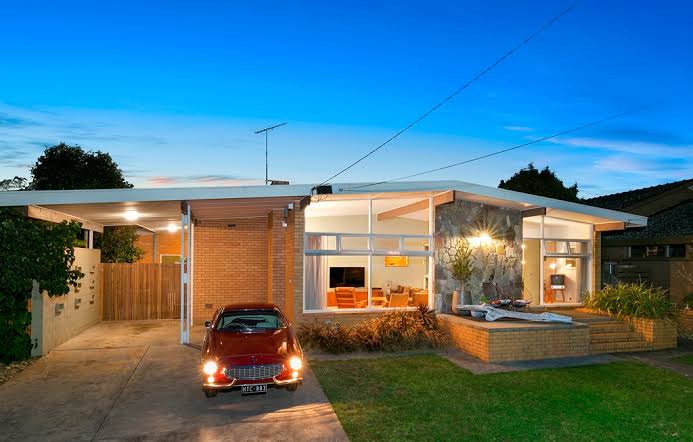
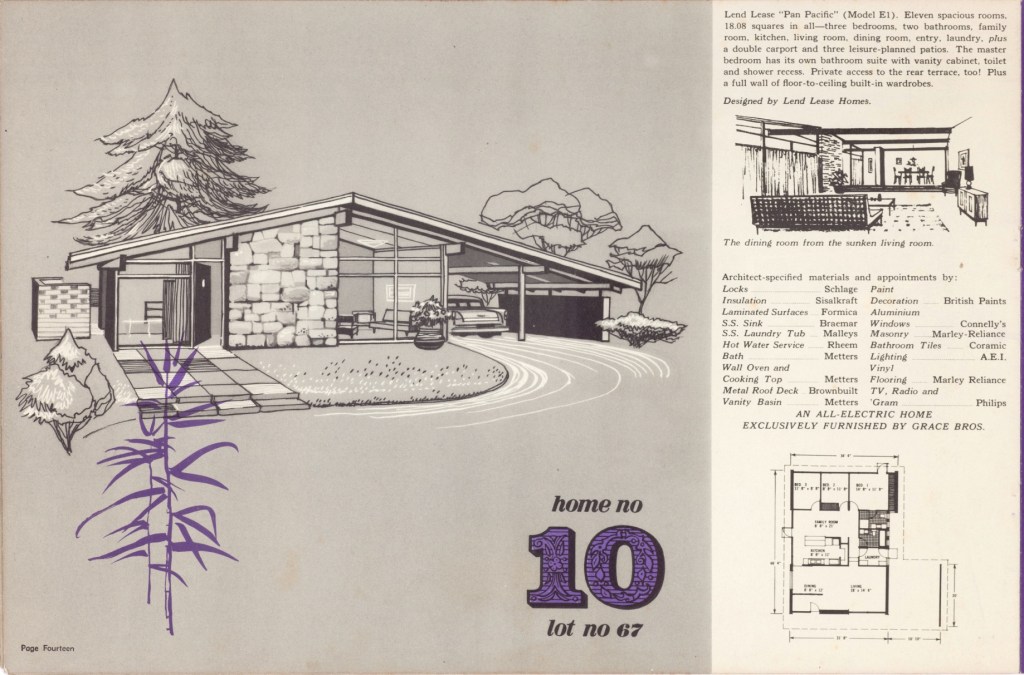
To me, Eichlers were a future vision of the ultimate post war house: produced en masse they symbolised rapid innovation, not just affordable housing.
I find them to be a fascinating commentary on progress and the post war psyche led by the US. Today many are coveted still, and are protected, maintained, extended or improved.
There are loads of wonderful sites, blogs and books with Eichler information – enjoy!

 Sydney House.